The Architecture of Community
Exploring the invisible architectures shaping belonging, leadership, governance, and collective life, and how we might design more conscious, participatory, and life-supporting systems together.
Course Overview
NOTE:
For now, I have set the sessions for Wednesdays. Once registration is finalized, I’ll be doing a poll with the cohort to see if there is a preference to shift the dates. That said, I can’t promise that we’ll be able to find days that work perfectly for everyone, so I want to keep some flexibility around this.
Architecture of Community
Exploring the Invisible Structures That Shape How We Live, Lead and Organize Together
Every community, organization, and collective has an architecture.
Some of it is visible: roles, policies, spaces, organizational charts, strategies, and governance structures. But much of what determines whether people can truly belong, participate, collaborate, and evolve together is invisible.
It lives in the culture we create, the way power moves, how decisions are made, who feels able to speak, how responsibility is shared, how conflict is navigated, what behaviors are rewarded, and the assumptions and values we carry without necessarily naming them.
Architecture of Community is an eight-week collective inquiry into these invisible structures of human systems.
Together, we will explore what allows communities and organizations to become healthier, more adaptive, participatory, and life-supporting, and what prevents them from doing so.
Across the eight weeks, we will investigate belonging and participation; power, authority and stewardship; governance and collective responsibility; culture and hidden hierarchies; trust, accountability and relational dynamics; conflict and repair; systems thinking and emergence; and the conditions that allow people and communities to flourish.
A central thread throughout the course is the relationship between self, relationship, and system. How does our personal relationship with power influence the way we lead? How does our need to belong shape our willingness to disagree? How do individual patterns become collective cultures? And how might greater awareness of these dynamics change the systems we create?
Rather than offering a fixed model for the “ideal community,” this course invites participants to become more attentive observers and conscious stewards of the systems they are already part of.
Through dialogue, reflection, systems mapping, real-world observation, and collaborative inquiry, participants will examine a community, organization, or initiative from their own lives and begin mapping its invisible architecture.
The course also asks us to look backward as we look forward. Many of the questions we face today are not new. Across generations, movements and disciplines, people have experimented with different ways of organizing power, creating belonging, governing collectively, caring for one another, and responding to social and ecological challenges. Rather than continually replacing one paradigm with another, we will ask what each has taught us: What worked? What didn't? What blind spots emerged? What wisdom deserves to be carried forward?
Architecture of Community therefore becomes a space for collective sensemaking across disciplines, cultures, generations, and lived experiences, not in search of one universal model, but to weave together existing wisdom while experimenting with what healthier forms of collective life might become.
By the end of the journey, participants will have developed a deeper capacity to see the systems beneath the structures, and to more intentionally design and steward the conditions through which people can belong, contribute, take responsibility, navigate difference, and evolve together.
Who Is This Course For?
This course is for people who are deeply curious about how we live, lead, organize, and belong together, and what healthier forms of community and collective life could look like.
It may be particularly relevant for:
- Architects, designers, and urban thinkers interested in the invisible social and relational systems shaping the places we create
- Community builders, facilitators, and organizers exploring healthier models of belonging, participation, and collective responsibility
- Leaders, founders, and organizational teams navigating questions of culture, governance, power, trust, and collaboration
- Land stewards and place-based practitioners thinking about the relationship between people, place, responsibility, and long-term stewardship
- Artists, educators, and cultural practitioners interested in relational and systemic approaches to social change
- People building initiatives, networks, movements, or communities who want to become more conscious of the invisible structures they are creating
- Individuals questioning inherited models of work, leadership, power, governance, and community, and curious about what might emerge in their place
No specific academic or professional background is required.
What You'll Learn
- Develop the ability to recognize and analyze the invisible structures shaping communities, organizations, and collective systems, including culture, power dynamics, governance, belonging, and participation.
- Explore and apply systems-thinking and relational frameworks to imagine healthier models of leadership, collaboration, stewardship, and collective design.
- Create a reflective or practical community-based concept, framework, dialogue experience, or systems map that translates course insights into real-world application.
What's Included
Live Sessions
Interactive classes with your instructor
Session Recordings
Lifetime access to all recordings
Community Access
Connect with fellow learners
Certificate
Proof of course completion
Real-World Project
The personal project: A Living Systems Lab
At the beginning of the course, each participant chooses one human system they want to observe and experiment with throughout the eight weeks.
It could be:
an organization, business, nonprofit, community initiative, land project, team, neighborhood group, or project they are currently building
an existing community they belong to and want to understand differently
a household, family structure, partnership, friendship group, or small collaboration
something they are dreaming of creating, a school, collective, community centre, intentional community, network, organization, etc.
or, for someone without a specific project, “the community I want to belong to” — imagining what its invisible architecture would need to be
Week 1 — Map the system
What is this system? What is its purpose? Who participates? What are its visible and invisible structures?
Week 2 — Map belonging
Who belongs? What creates belonging? What does someone have to do to belong? Who sits at the edges? Where does participation happen?
Week 3 — Map power
Where does power actually live? Who has formal authority? Who has informal influence? Where is authority clear or unclear?
Week 4 — Map governance
How are decisions made? Who is responsible for what? Where is accountability held? What agreements exist — spoken and unspoken?
Week 5 — Map culture
What behaviors are rewarded? What stories are told? What is considered “normal”? What can and cannot be spoken? What values are actually lived?
Week 6 — Map tension
How does this system deal with disagreement, boundaries, conflict, feedback and repair? What gets avoided?
Week 7 — Map change
How does the system respond to uncertainty? Where is it rigid? Where is it adaptive? What is trying to emerge?
Week 8 — Design an experiment
Based on everything you've observed, what is one condition you could change?
Session Schedule
About the Instructor

Architect | Systems Designer & Community BuilderFounder and Though Leader of Harmonia
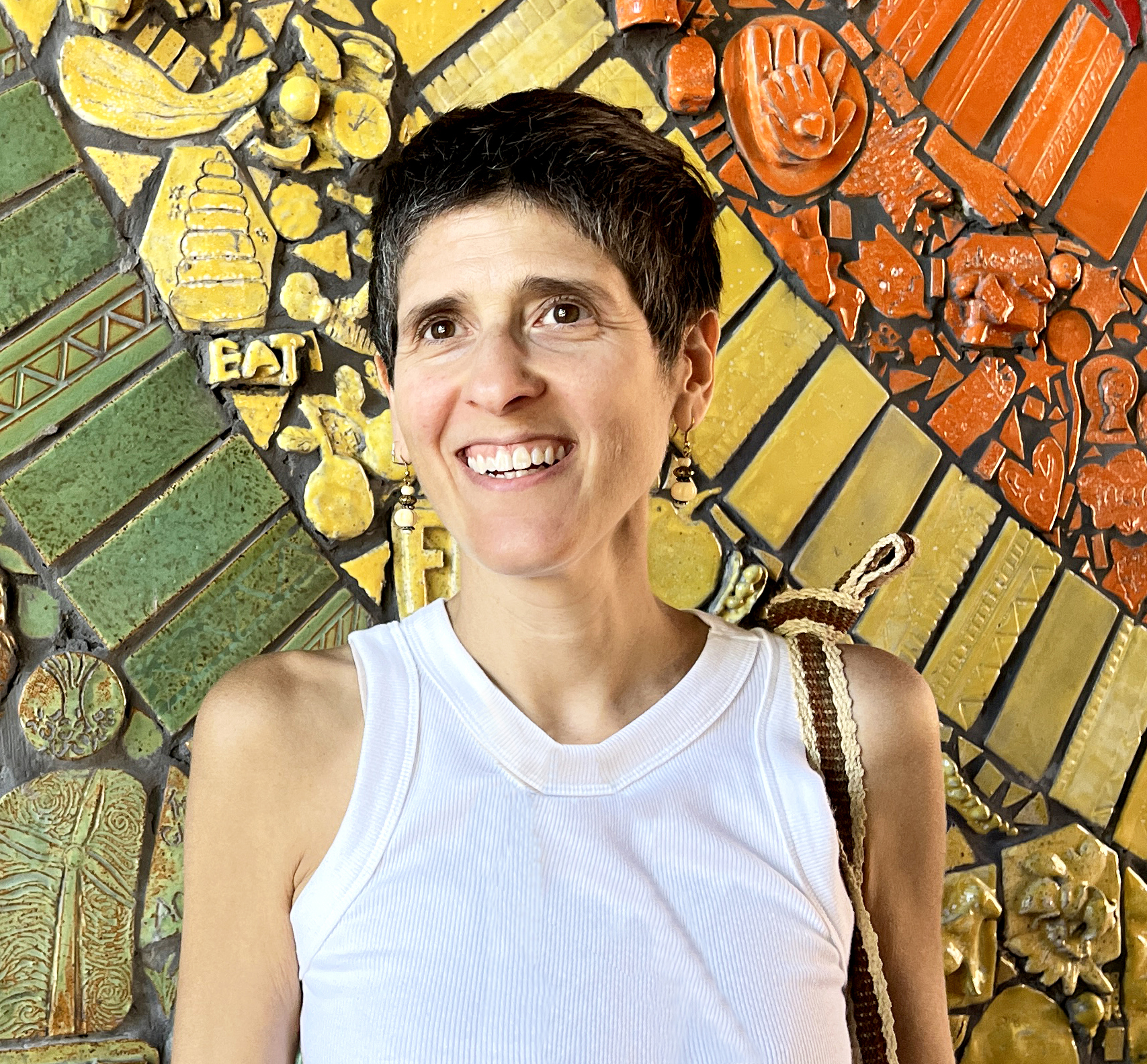
Hello - I’m Hadil , a creative leader, systems thinker, and experience designer working at the intersection of healing, community, and transformation. My perspective on life is unique, and I love exploring new places and connecting with diverse individuals to expand my horizons. I prefer not to be defined by my accomplishments, as they hold personal meaning for me. Instead, I let my personality and experiences speak for themselves, in ways that go beyond words. Rooted in architecture and expanded through movement, dialogue, and storytelling, my work is about reimagining how we live, relate, and build, both physically and socially. I help turn complex, meaningful ideas into tangible, human-centered experiences that spark reflection, connection, and collective evolution. This passion and curiosity led me to co-create an initiative called "Design to Connect." I’ve also designed programs, facilitated deep conversations, built bridges between disciplines, and now working on launching Harmonia , a platform for sacred advocacy that integrates body, breath, voice, and systems transformation. My strengths lie in: Translating deep insights into creative strategies and community offerings Designing experiences (retreats, dialogues, activations) that shift people at their core Holding space for nuance, complexity, and cross-cultural sensitivity Bridging structure with soul: from system maps to ritual, from strategy to story Whether it’s as a creative strategist, facilitator, program lead, or thought partner, I’m ready to serve — and co-create what’s next with people and places that feel alive, daring, and aligned. If you're building something visionary and human, I’d love to connect.
$800
This course has already begun.
Started Oct 7.
Sign up to be notified when this course runs again.
October 7
14 students max
8 sessions
90 min each